
Effect of mineral composition and chemical activation of clay raw materials on the flexural strength of ceramic bodies
DOI:
https://doi.org/10.55225/sti.711Keywords:
clay minerals, flexural strength, modulus of rupture, sodium activation, smectite, kaolinite, illite, ceramic bodies, air-dried strength, clay minerals, flexural strength, modulus of rupture, sodium activation, smectite, kaolinite, illite, ceramic bodies, air-dried strengthAbstract
The mechanical strength of ceramic bodies in the air-dried state is one of the key technological parameters determining the course of forming, drying, and transport processes of ceramic green bodies. This study evaluates the influence of mineral composition and chemical activation of clay raw materials on the flexural strength of ceramic bodies, with particular emphasis on kaolinite, illitic clays, and smectite-rich raw materials. The effect of quartz sand addition and sodium activation (Na₂CO₃) on the mechanical properties of the specimens was also investigated.
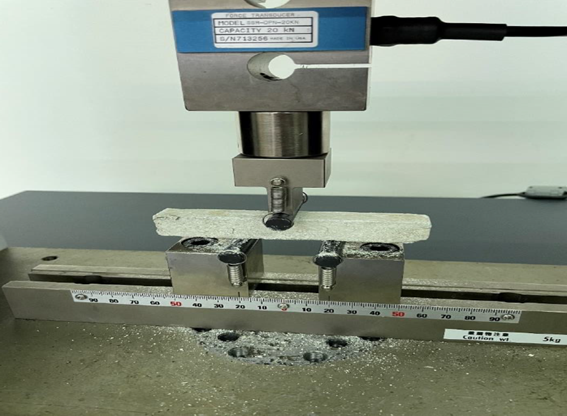
Samples were prepared from KOC kaolin, Krakowiec clay, and bentonitic clay from the Bełchatów deposit, in both non-modified form and after sodium activation in the range of 3–10% Na₂CO₃. In the case of bentonitic bodies, quartz sand was added in amounts of 10–30%. Flexural strength was determined using the three-point bending method in the air-dried state and after drying at 105°C. In addition, the moisture content of the samples after drying was analyzed.
The obtained results demonstrated a significant influence of both mineral composition and chemical modification on the modulus of rupture values. The highest air-dried flexural strength was achieved for smectite-rich raw materials, whereas kaolin-based bodies exhibited the lowest binding capacity. Sodium activation resulted in a substantial improvement in the strength of all investigated ceramic bodies, although the effect strongly depended on the type of raw material and its particle size distribution. For bentonitic bodies containing 30% quartz sand, the highest modulus of rupture values were obtained with 10% Na₂CO₃ addition. Samples dried at 105°C exhibited higher strength values, which was attributed to closer packing of clay mineral layers and enhanced electrostatic interactions.
Downloads
References
Nait-Ali B, Alzina A, Lauro N, Smith DS. Perspectives in drying of ceramics. Open Ceramics. 2024;17:100554. https://doi.org/10.1016/j.oceram.2024.100554. DOI: https://doi.org/10.1016/j.oceram.2024.100554 Google Scholar
Dondi M, Raimondo M, Zanelli C. Clays and bodies for ceramic tiles: Reappraisal and technological classification. Applied Clay Science. 2014;96:91–109. https://doi.org/10.1016/j.clay.2014.01.013. DOI: https://doi.org/10.1016/j.clay.2014.01.013 Google Scholar
Lauro N, Oummadi S, Alzina A, Nait-Ali B, Smith DS. Computer model of drying behaviour of ceramic green bodies with particular reference to moisture content dependent properties. Journal of the European Ceramic Society. 2021;41(14):7321–7329. https://doi.org/10.1016/j.jeurceramsoc.2021.07.042. DOI: https://doi.org/10.1016/j.jeurceramsoc.2021.07.042 Google Scholar
Murzyn P, Brylska E, Stolecki J. Ceramiczne materiały budowlane: metody badań surowców i wyrobów. Kraków: Wydawnictwo AGH; 2014. Google Scholar
Vieira CMF, Sánchez R, Monteiro SN. Characteristics of clays and properties of building ceramics in the state of Rio de Janeiro, Brazil. Construction and Building Materials. 2008;22(5):781–787. https://doi.org/10.1016/j.conbuildmat.2007.01.006. DOI: https://doi.org/10.1016/j.conbuildmat.2007.01.006 Google Scholar
Wyszomirski P, Galos K. Surowce mineralne i chemiczne przemysłu ceramicznego. Kraków: Uczelniane Wydawnictwo Naukowo-Dydaktyczne AGH; 2007. Google Scholar
Kordek M. Technologia ceramiki. Cz. 1. Warszawa: Wydawnictwa Szkolne i Pedagogiczne; 1975. Google Scholar
Reed JS. Principles of Ceramics Processing. 2nd ed. New York: Wiley; 1995. Google Scholar
Carter CB, Norton MG. Ceramic Materials: Science and Engineering. New York: Springer; 2013. DOI: https://doi.org/10.1007/978-1-4614-3523-5 Google Scholar
Stoch L. Minerały ilaste. Warszawa: Wydawnictwa Geologiczne; 1974 Google Scholar
Pisarczyk S. Gruntoznawstwo inżynierskie. Warszawa: Wydawnictwo Naukowe PWN; 2014. Google Scholar
Handke M. Krystalochemia krzemianów. Kraków: Wydawnictwo AGH; 2005. Google Scholar
Bergaya F, Lagaly G. Handbook of Clay Science. 2nd ed. Amsterdam: Elsevier; 2013. DOI: https://doi.org/10.1016/B978-0-08-098258-8.00028-6 Google Scholar
Wilson, I. Applied Clay Mineralogy. Occurrences, processing and application of kaolins, bentonite, palygorskitesepiolite, and common clays. Clays and Clay Minerals. 2007;55:644–645. https://doi.org/10.1007/BF03406033. DOI: https://doi.org/10.1007/BF03406033 Google Scholar
Jasmund K, Lagaly G. Tonminerale und Tone. Darmstadt: Steinkopff Verlag; 1993. DOI: https://doi.org/10.1007/978-3-642-72488-6 Google Scholar
Stoch L, Widaj J. Zależność wytrzymałości mechanicznej od uziarnienia surowców ilastych. Ceramika. 1970;2:45–56. Google Scholar
Vaculíková L, Plevová E, Vallová S, Koutník I. Characterization and differentiation of kaolinites from selected Czech deposits using infrared spectroscopy and differential thermal analysis. Acta Geodynamica Geomaterialia. 2011;8(1):59–67. Google Scholar
Śliwa T. Analiza odkształcania i pękania materiałów ilastych podczas suszenia konwekcyjnego. [Doctoral thesis]. Poznań: Politechnika Poznańska; 2014. Google Scholar
Bergaya F, Theng BKG, Lagaly G, editors. Handbook of Clay Science. Amsterdam–Tokyo: Elsevier; 2006. Google Scholar
Murray HH. Developments in Clay Science. Vol. 2. Amsterdam: Elsevier Science; 2007. Google Scholar
Ayadi A, Baklouti S, Kammoun A, Soro J. Study of clay’s mineralogy effect on mechanical properties of ceramic body using an experimental design. International Journal of Applied Ceramic Technology. 2021;19(3):1477–1489. https:doi.org/10.1111/ijac.13983. DOI: https://doi.org/10.1111/ijac.13983 Google Scholar
Bernhardt M, Justnes H, Tellesbø H, Wiik K. The effect of additives on the properties of lightweight aggregates produced from clay. Cement and Concrete Composites. 2014;53:233–238. https://doi.org/10.1016/j.cemconcomp.2014.07.005. DOI: https://doi.org/10.1016/j.cemconcomp.2014.07.005 Google Scholar
Ayari F, Srasra E, Trabelsi-Ayadi M. Effect of exchangeable cations on the physicochemical properties of smectite. Surface Engineering and Applied Electrochemistry. 2007;43(5):369–378. https://doi.org/10.3103/S1068375507050110. DOI: https://doi.org/10.3103/S1068375507050110 Google Scholar
Slaný M, Jankovič L, Madejová J. Near-IR study of the impact of alkyl-ammonium and -phosphonium cations on the hydration of montmorillonite. Journal of Molecular Structure. 2022;1256:132568. https://doi.org/10.1016/j.molstruc.2022.132568. DOI: https://doi.org/10.1016/j.molstruc.2022.132568 Google Scholar
Kłapyta Z, Żabiński W, editors. Sorbenty mineralne Polski. Kraków: Uczelniane Wydawnictwa Naukowo-Dydaktyczne AGH; 2008. Google Scholar
Galos K, editor. Surowce skalne: surowce ilaste. Kraków: Instytut Gospodarki Surowcami Mineralnymi i Energią Polskiej Akademii Nauk; 2004. Google Scholar
Panna W, Wyszomirski P, Motyka J. (2012). Bentonit z Kopernicy jako materiał do zastosowań hydroizolacyjnych. Zeszyty Naukowe IGSMiE PAN. 2012;83:131–145. Google Scholar
Panna W, Prosowicz G, Wyszomirski P. Ocena zawartości smektytu w niektórych ceramicznych surowcach ilastych na podstawie spektrofotometrycznych badań sorpcyjnych. Chemik. 2014;68(7):612–619. Google Scholar
Panna W, Wyszomirski P, Gasek K, Dudek R, Łabuz A. (2015). Hot stage microscopy in determining the suitability of selected clay rocks from South-Eastern Poland to manufacture lightweight aggregates. Cement, Wapno, Beton. 2015;20(2):79–87. Google Scholar
Komadel P. Chemically modified smectites. Clay Minerals. 2003;38(1):127–138. https://doi.org/10.1180/0009855 DOI: https://doi.org/10.1180/0009855033810083 Google Scholar
Oczoś K. Kształtowanie ceramicznych materiałów technicznych. Rzeszów: Oficyna Wydawnicza Politechniki Rzeszowskiej; 1996. Google Scholar
Downloads
Published
How to Cite
Issue
Section
License
Copyright (c) 2026 Sebastian Dydo, Wojciech Panna, Jarosław Cyboroń, Radosław Madej

This work is licensed under a Creative Commons Attribution-ShareAlike 4.0 International License.