
Problems in the methodology of assessing the value of the environment
DOI:
https://doi.org/10.55225/sti.675Keywords:
model, cost assessment, natural capital, technogenic development, sustainabilityAbstract
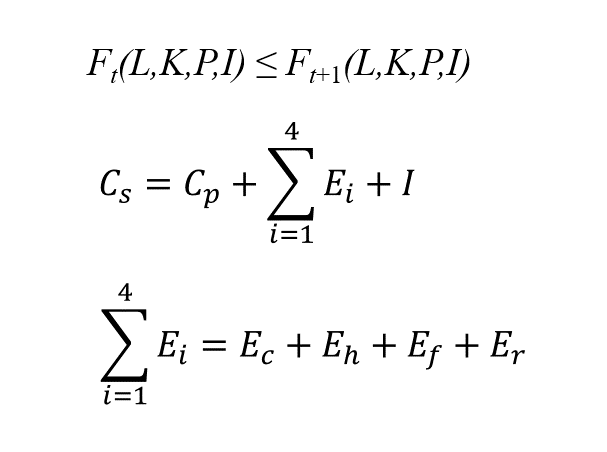
The aim of this study is to optimize existing ecological-economic models for assessing the value of the environment, integrating social and economic factors. Using a rigorous scientific methodology and system analysis, the author synthesizes known models of environmental valuation within the broader framework of global sustainable development. The proposed model incorporates mathematical algorithms that allow for a quantitative estimation of environmental damage, while also facilitating the development of effective strategies to reduce the rate of natural capital depletion by substituting it with alternative resources. The study reveals significant shortcomings in existing ecological-economic models, notably the omission of the social dimension and the failure to explicitly account for critical natural capital as an essential component of total natural capital. Such omissions are scientifically unacceptable. The economic valuation model of natural capital proposed in this paper aims to refine and enhance existing methodologies through optimization.
Downloads
References
Askarov RA, Lakman IA, Sadikova LF, Karelin AO, Askarova ZF. Spatial modeling of mortality and air pollution in the Republic of Bashkortostan. Human Ecology. 2019;4:4–9. https://doi.org/10.33396/1728-0869-2019-4-4-9. DOI: https://doi.org/10.33396/1728-0869-2019-4-4-9 Google Scholar
Castro CJ. Sustainable development: Mainstream and critical Perspectives. Organization and Environment. 2024;17(2):195–225. Available at: https://www.jstor.org/stable/26162866. DOI: https://doi.org/10.1177/1086026604264910 Google Scholar
Chugunov A, Vinnitsky V, Nafikova G. Extraction of valuable components from artificial waters. Ecology and Industry of Russia. 2020;24(12):4–10. [in Russian]. https://doi.org/10.18412/1816-0395-2020-12-4-10. DOI: https://doi.org/10.18412/1816-0395-2020-12-4-10 Google Scholar
Collste D, Pedercini M, Cornell SE. (2017). Policy coherence for achieving the SDGs: Using integrated simulation models to evaluate effective policies. Sustainability Science. 2017;12:921–931. https://doi.org/10.1007/s11625-017-0457-x. DOI: https://doi.org/10.1007/s11625-017-0457-x Google Scholar
Vargas CM, Cooper PJ. Implementing Sustainable Development: From Global Policy to Local Action. Lanham: Rowman and Littlefield Publishers; 2004. DOI: https://doi.org/10.5771/9781461637677 Google Scholar
Du Pisani JA. Sustainable development – historical roots of the concept. Environmental Sciences. 2006;3(2):83–96. https://doi.org/10.1080/15693430600688831. DOI: https://doi.org/10.1080/15693430600688831 Google Scholar
Kolk A. The social responsibility of international business: From ethics and the environment to CSR and sustainable development. Journal of World Business. 2016;51(1):23–34. https://doi.org/10.1016/j.jwb.2015.08.010. DOI: https://doi.org/10.1016/j.jwb.2015.08.010 Google Scholar
Weiss P, Bentlage J. Environmental Management Systems and Certification. Upsala: Baltic University Press; 2018. Google Scholar
Retchless DP, Brewer CA. Guidance for representing uncertainty on global temperature change maps. International Journal of Climatology. 2016;36(3):1143–1159. https://doi.org/10.1002/joc.4408. DOI: https://doi.org/10.1002/joc.4408 Google Scholar
Downloads
Published
How to Cite
Issue
Section
License
Copyright (c) 2026 Dmitrys Ulanovs

This work is licensed under a Creative Commons Attribution-ShareAlike 4.0 International License.